July 18, 2026 | Keynotes
The Cables Under the Sea
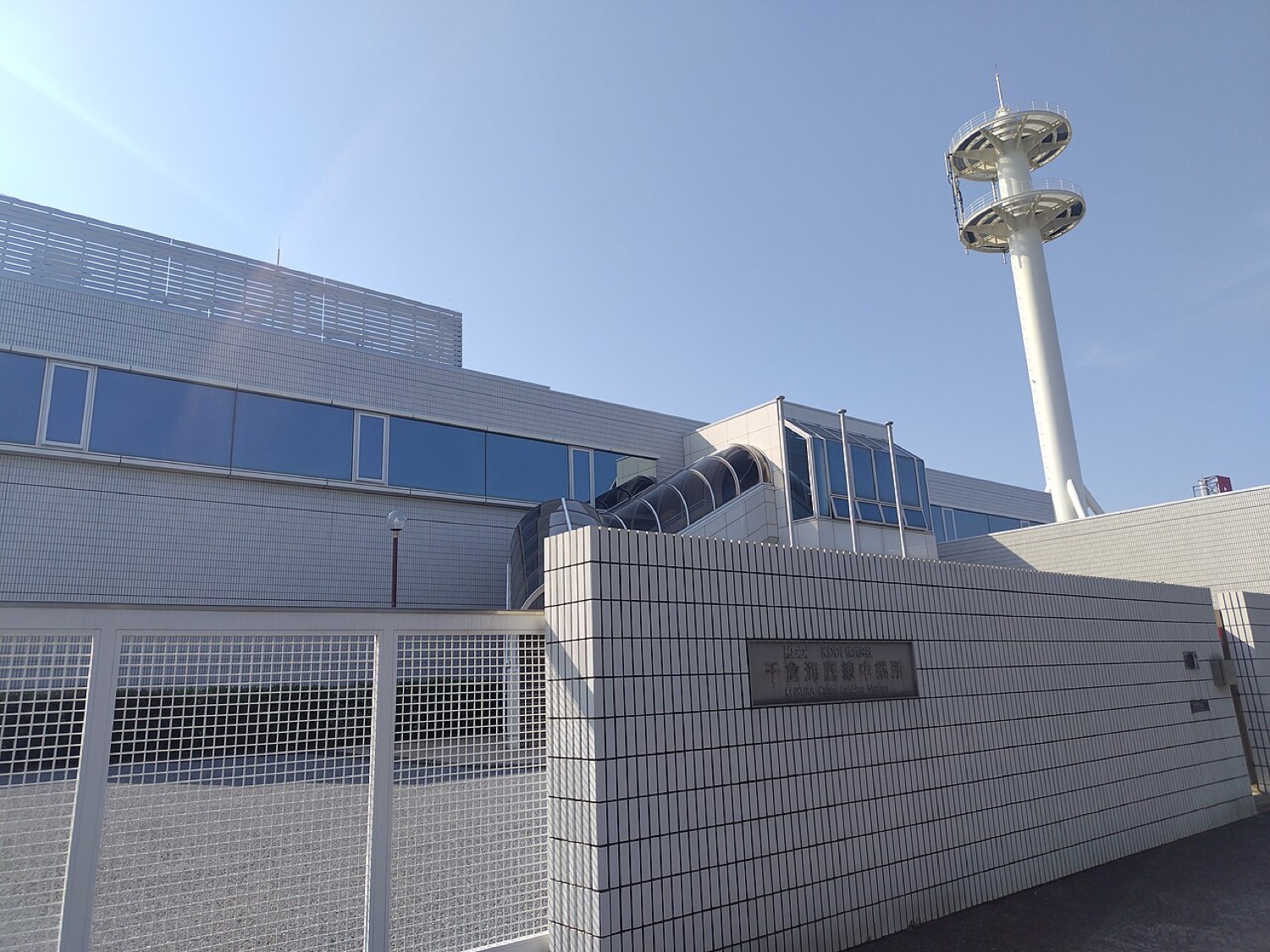
People often assume that international internet traffic goes by satellite. In fact, the vast majority of data travelling between continents moves through a few hundred fiber-optic cables lying on the ocean floor. Together they stretch well over a million kilometers, and in deep water many are about as thick as a garden hose.
How a cable system is built
A submarine cable contains a small number of fiber pairs protected by copper, steel and polyethylene. Armoring gets heavier close to shore, where anchors and fishing gear pose the main threat. Repeaters along the route boost the light every so often, powered by a high-voltage current fed from each end. At each landfall the cable enters a station like the one in the photo above, where it meets the terrestrial network.
Who owns them
For most of their history, these systems belonged to consortia of national telecom carriers. Over the past decade the balance has shifted toward cloud and content giants such as Google, Meta, Microsoft and Amazon, which now fund or own a large share of new capacity. They need the bandwidth to move data between their own data centers, and building their own cables can be cheaper than buying the capacity from someone else.
Why they break
Cable faults happen somewhere in the world roughly every few days, most often because of fishing and anchors. Natural events such as undersea landslides also take their toll. Repair ships can haul the damaged section up and splice in a new one, but that can take days or weeks. Recent incidents in the Red Sea and the Baltic have pushed cable security onto the agenda of governments that had never given it much thought.
The small islands that punch above their weight
Good connectivity has helped some unlikely places build entire industries. Malta, Gibraltar and the Isle of Man have become major licensing and hosting centers for online gambling, in part because they combine a clear regulatory regime with strong international links. A sportsbook or online casino based on a small island needs resilient routes to its customers on the mainland, and that usually means several subsea cables landing at different points. Lose them all and the business stops. These operators therefore tend to be careful, well-informed buyers of diverse capacity.
What this means for the network of the future
Traffic between continents keeps growing, and new routes are being built to avoid chokepoints such as the Red Sea and to reach regions that have relied on only one or two systems. Satellites will help at the margins, as we discuss in our piece on low Earth orbit, but the backbone of the global internet will stay on the seabed for a long time to come.
More from the Journal


